
Forex vs Stocks vs Crypto: 2026 Comparison
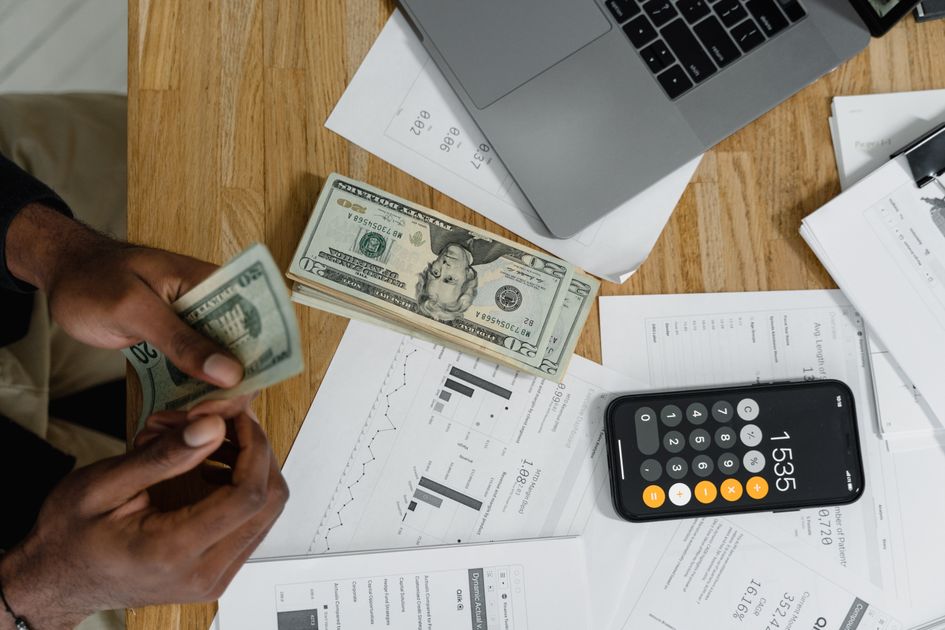
Photo by Tima Miroshnichenko on Pexels
The most common question that lands in our inbox in 2026 is some variant of “Should I trade forex, stocks, or crypto?” The honest answer is that the three markets are different products with different risk profiles, different costs, and different time commitments. Picking the right one is not about which is most profitable — every market has produced winners and losers — but about which fits your bankroll, schedule, and temperament.
We have active desks in all three markets. Below is the side-by-side comparison we wish someone had handed us a decade ago. We compare cost per trade, available leverage, market hours, regulation, taxation, typical volatility, and the kind of trader who tends to thrive in each environment.
Risk warning: Forex trading is leveraged and high-risk. CFD/forex retail-investor losses commonly run 70–85% according to broker disclosures. Trade only with capital you can afford to lose.
How This Guide Works
We rank the three markets on six dimensions a retail trader actually feels: capital efficiency, cost, hours, volatility, regulation, and learning curve. None is universally “best” — each has trade-offs you only feel after a few months of live participation. Where a section needs more depth, we link to the dedicated Finace Stoks guide.
| Dimension | Forex | Stocks | Crypto |
|---|---|---|---|
| Daily volume | $7.5T | $1.4T (US equities) | $80–$120B |
| Market hours | 24/5 | 6.5h/day weekdays | 24/7 |
| Leverage (retail) | 30–50:1 | 2:1 (US RegT) / 4:1 day | 2–10:1 (regulated) |
| Typical spread on top instrument | 0.1–1.0 pips | $0.01–$0.05 | 0.05–0.20% |
| Min capital to start | $100 | $100 | $10 |
| US tax default | Section 988 ordinary | Capital gains | Capital gains/property |
The Forex Market in 2026
Forex is the deepest and most liquid market on the planet. EUR/USD trades roughly $1.5 trillion per day on its own. Spreads on major pairs at top ECN brokers compress to 0.1 pips during the London-New York overlap, and retail leverage of 30:1 (EU/UK) or 50:1 (US) gives small accounts real position sizing flexibility.
The downside is that the same leverage that lets a small account participate also accelerates losses. CFD/forex retail-loss rates of 70–85% are largely a function of leverage misuse. Forex also has thin retail education and a higher proportion of bad-actor offshore brokers — see our best forex brokers of 2026 ranking for vetted names.
The Stock Market in 2026
US equities remain the deepest single-currency capital market — about $50 trillion in market capitalization across the NYSE and Nasdaq. Costs have collapsed: most retail brokers offer commission-free trading, fractional shares are universal, and the bid-ask on liquid names like Apple or Microsoft runs $0.01.
Leverage is conservative — 2:1 overnight under US Regulation T, 4:1 intraday under pattern day-trader rules. Hours are limited to 09:30–16:00 ET (with extended sessions). Volatility is typically lower than forex on a notional basis but feels higher because position sizes are larger relative to leverage. Long-term capital gains tax (US) is friendlier than forex’s default ordinary-income treatment.
The Crypto Market in 2026
Crypto in 2026 is a more mature market than it was even three years ago. Bitcoin and Ethereum have spot ETFs in most major jurisdictions, regulated exchanges (Coinbase, Kraken, Bitstamp) carry money-transmitter licences, and on-chain volumes are routinely auditable. Volatility has compressed somewhat — Bitcoin’s 30-day realized vol now sits around 35% versus 80%+ in 2021 — but remains far higher than equities.
The crypto edge is 24/7 liquidity and a small-account-friendly entry point ($10 minimums on most regulated exchanges). The drawback is platform risk (exchanges still get hacked), wallet complexity for self-custody, and an evolving regulatory map that varies by state and country.
Cost-Per-Trade Comparison
| Market | Headline Cost | Hidden Costs | Typical Round-Trip on $10K |
|---|---|---|---|
| Forex (raw account) | 0.1 pips + $7/lot | Swap on overnight holds | $8–$12 |
| Forex (standard) | 1.0 pips | Swap on overnight holds | $10 |
| US stocks | $0 commission | PFOF / wider spreads | $1–$3 |
| Crypto (regulated) | 0.10–0.50% taker | Withdrawal fees | $10–$50 |
Leverage and Capital Efficiency
Forex is the most capital-efficient market for short-term trading. A $1,000 account at 30:1 leverage controls $30,000 of notional EUR/USD, which translates to about $3 per pip on a 0.3-lot position. Stocks at 4:1 day-trading margin offer $4,000 of buying power on the same $1,000 — significantly less notional. Regulated crypto leverage maxes out around 10:1 in the EU/UK and is more restricted in the US (often 2x).
The flip side is that capital efficiency is a double-edged sword. Forex traders blow up faster than stock traders precisely because leverage is higher.
Volatility and Personality Fit
Stocks suit fundamental thinkers who like reading 10-Ks and holding positions for weeks to years. Forex suits macro-minded traders who follow central bank policy and like positions measured in days to a few weeks. Crypto suits traders comfortable with extreme volatility and tolerant of overnight gap risk.
Day-trading is viable in all three but the rhythm differs — stocks have a defined open and close, forex has session overlaps, crypto has weekend liquidity gaps you have to plan around.
How to Choose Your Market
- Audit your schedule — if you cannot be at a screen 09:30–11:00 ET, stocks intraday is hard.
- Match leverage tolerance to your bankroll — under $5,000, forex micro lots beat stocks for capital efficiency, but only if you respect risk rules.
- Think about taxation — US long-term cap gains beat section 988 ordinary income on forex unless you elect 1256.
- Consider where your edge is — if you understand a sector, trade its stocks; if you follow central banks, trade currency.
- Start with one market, not three — diversification across asset classes is a year-three problem, not a year-one problem.
Recommended Offers
💡 Editor’s pick: For forex, IC Markets gives our active desks the tightest pricing — 0.1 pips raw on EUR/USD and ASIC oversight.
💡 Editor’s pick: For stocks, Interactive Brokers remains our pick for serious traders thanks to global reach and tier-1 execution.
💡 Editor’s pick: For regulated crypto, Coinbase and Kraken offer the strongest US compliance posture and clean tax exports.
FAQ — Forex vs Stocks vs Crypto
Q: Which market is most profitable for retail traders? A: None has a structural edge — outcomes depend on the trader, not the market. Most retail traders lose money in all three.
Q: Can I trade forex and stocks from the same broker? A: Yes — Interactive Brokers, Saxo Bank, and IG offer both. Crypto is usually held at a separate regulated exchange.
Q: Is crypto riskier than forex? A: Per dollar, yes — crypto’s realized volatility runs 3–5x EUR/USD. But forex’s higher leverage often produces larger drawdowns on small accounts.
Q: Are forex profits taxed like stocks? A: Usually not. Default US treatment is ordinary income (section 988); a section 1256 election gives 60/40 long/short blended rate. See our forex tax guide.
Q: Which market is best for beginners? A: For most beginners, stocks — lower leverage, more accessible education, friendlier tax treatment. Forex is fine if you respect leverage discipline.
Q: Can I switch between markets later? A: Of course — many traders end up running positions in all three. Just master one before adding another.
Related Reading on Finace Stoks
- Best Forex Brokers of 2026
- Best Stocks to Buy 2026
- Best Cryptocurrencies 2026
- Forex Leverage Explained
- Forex Trading Tax Guide for 2026
Final Verdict
There is no universally best market in 2026. Forex is for traders who want capital efficiency, 24/5 access, and macro themes. Stocks are for those who prefer fundamental analysis, tax-friendly long-term holdings, and a defined trading day. Crypto suits traders comfortable with high volatility and 24/7 markets. Pick the one that fits your schedule and temperament, master it for at least a year, and only then expand into the others.
This article is for informational purposes only and is not investment advice. Forex trading carries substantial risk and is not suitable for all investors. Spreads, leverage, and broker terms are accurate as of publication and subject to change. Finace Stoks may receive compensation for some placements; rankings are independent.
By Finace Stoks Editorial · Updated May 9, 2026
- forex
- comparison
- 2026
- currency trading